| Even though Coleman County was
established
and had a few
settlers as
early as 1856,
there was
little
settlement and
no county seat
was
established
until late
1875.
Coleman City
was selected
as the county
seat, and in
July 1876,
lots were put
on sale to
establish the
town site of
Coleman.
By late 1876,
there were
only six
houses and
eight tents,
one general
store and
three
saloons.
At that time,
tents dotted a
small area,
which
paralleled
what is now
known as
Commercial
Avenue.
Stores
operated out
of the tents
and the town's
busy attorneys
used tents as
offices.
Soon, however,
wooden houses
and buildings
began to
replace the
temporary
dwellings.
To
learn more
about the
early
Episcopalians
of Coleman and
Coleman
County, we
have to turn
to the diary
of Bishop
Alexander
Charles
Garrett, who
was elected
Missionary
Bishop of
Northern Texas
in 1874.
"July
25, 1877 - Set
out for
Coleman City
(from
Brownwood).
Arrived and
found that it
was a very new
and primitive
frontier
city.
Not finding
any
'disciples'
there I
resolved to
try and find
Col. Anderson
whose home is
somewhere in
Callahan
County.
Drove on until
dusk when I
reached
Nation's Ranch
on Pecan
Bayou.
The place was
deserted.
Debated for
some time as
to what was
best to be
done.
During this
process I saw
a man at some
distance going
down the steep
bank with a
bucket in his
hand and
revolver
belted to his
waist.
Drove up to
him to inquire
for some place
of shelter on
the
road.
There was none
within many
miles. I
was welcome to
stay by the
camp of the
cow-herds.
They could not
offer me any
bed for they
never used
such things
and the supper
would be a
little rough
but I was
welcome to a
share.
Resolved to
stay.
Tied the
horses to a
fence, took a
small portion
of their food
when it was
prepared and
camped in the
buggy.
About eleven
Mr. Nation
himself
arrived and
took me to the
deserted house
aforesaid, put
me in
possession of
the whole and
retired
himself to
sleep by the
cattle
pen. He
had just sold
five hundred
head of them
that evening
he was anxious
that they
should be well
guarded.
"July
26, 1877 - At
the first
blush of dawn
I set
forward.
Following
directions
plainly given
I took the
wrong
road.
After ten
miles or so I
came to a
house and had
my growing
suspicions
confirmed by
ascertaining
my
mistake.
Asked for
breakfast but
the poor
people had
nothing to
give for love
or
money. I
paid fifty
cents for a
few green
stalks of corn
for my horses,
which when
they had
finished I
turned back to
correct my
unfortunate
blunder.
Gave up hopes
of finding my
Church colony
and started
for Fort
Griffin.
Drove all day.
Night closed
in black with
clouds and
thunder.
The ponies had
travelled
about seventy
five miles
since dawn and
were exhausted
with hunger
and
fatigue.
Stopped
accordingly
under a
mesquite tree,
staked out the
horses and
retired to
rest in the
buggy.
"July
27, 1877 -
About midnight
was aroused by
the howling of
the
coyotes.
Shortly after
an approaching
wagon scared
my already
excited
ponies, they
broke their
fastenings and
went off at a
gallop.
My spirit sank
a little; if I
should lose
them then the
consequences
might be
serious.
I jumped out
of the buggy
and spoke to
the flying
studs.
They knew my
voice, stopped
instantly,
turned round,
and came and
put their
noses in my
hand! I
tied them
again and
passed the
rest of the
night without
alarm.
At dawn I was
again on the
road.
Reached Fort
Griffin about
nine
o'clock.
The officer in
charge, Lieut.
Calladay, and
the surgeon of
the Post
received me
with cordial
warmth,
supplied my
wants, and
made me soon
forget the
forty hours I
had been
without
food.
That evening
it rained
furiously so
that no
service could
be had.
Spent the
evening in
conversation
with Lieut.
Calladay and
his
accomplished
wife
discussing
questions of
general
interest to
the Church in
this country
and the
world."
Bishop
Garrett
returned to
Dallas, and
again in
February 1878,
he set out for
Cleburne and
the
West. He
toiled through
deep mud for
eighteen
miles.
Again from his
diary,
"I spent two
hours washing
the sticky mud
off the poor
tired
horses.
Utterly tired
out." He
set forward
for
Weatherford.
"The road was
exceedingly
rough.
Broke five
spokes in one
wheel.
Braced the
wheel and went
on."
"February
20, 1878 -
Proceeded to
Coleman
City.
The wind as
measured by
the anemometer
was travelling
at the rate of
fifty miles an
hour. My
course was
exactly
against
it.
After a most
trying drive I
reached my
destination
safely.
Notice was
spread.
A small
congregation
was gathered
in the court
house. I
maintained a
vigorous
conflict the
whistling gale
for some
time.
The Prodigal
Son afforded a
suitable
theme.
Dr. (George
S.) Sykes -
only churchman
in town was
sick.
On
July 21, 1879,
Dr. Sykes
helped the
Bishop arrange
an evening
service in
Coleman in a
room over a
saloon.
"The clash of
billiard balls
and the loud
vulgar talk of
the persons
assembled
below afforded
a painful
accompaniment
to our work in
the upper
room."
The Bishop
made several
trips to
Coleman to
hold services
in the early
1880's.
On May 18,
1887, Bishop
Garrett
returned to
Coleman to
confirm the
first known
person at
Coleman into
the Episcopal
faith,
"Evening
Prayer being
said (in) the
Presbyterian
Church which
was kindly
loaned to us I
preached and
confirmed one
person - Miss
Mary Strother
Clow."
In
the meantime,
Bishop
Johnston of
the District
of Western
Texas was
making trips
to the area
around San
Angelo and on
one trip, came
to
Coleman.
He confirmed
Winfield Dancy
Ledbetter,
eldest
daughter of J.
P. and Evelina
Ledbetter, in
the fall of
1888. In
1889 Bishop
Johnston and
Bishop Garrett
agreed to an
exchange of
territory by
which the
counties of
Runnels,
Coleman and
Brown were
transferred to
Western
Texas.
The Journal of
the Missionary
District of
Western Texas,
1890 lists
Coleman as a
mission by May
of 1890 and
paying $8.70
to the
District.
In January
1890, the Bishop baptized one infant
and confirmed
one person in
Coleman, and
in 1891 he
returned to
confirm 4
women and one
man. In
1895, with the
formation of
the Diocese of
Dallas,
Runnels,
Coleman and
Brown Counties
returned to
Bishop
Garrett's
jurisdiction
in Northern
Texas.
In
the 1880's and
1890's, more
communicants
assembled when
missionaries
came from
Dallas and San
Antonio.
These included
J. P. and
Nancy
Ledbetter, Mr.
and Mrs. J. E.
Boog-Scott,
Mr. and Mrs.
R. L.
Boog-Scott,
Mr. and Mrs.
Jack
Babbington,
Billy and
Frank Anson,
Mr. and Mrs.
W. N. Hawkins,
William Gould
Busk, the
Paddleford
family, Mrs.
Elizabeth
Adams Clow,
the Klapper,
Sackett,
Harris,
Dibrell,
Rathmell,
Ayres,
Randolph,
Randall, and
Jackson
families.
On
June 5, 1909,
Bishop Garrett
gave consent
to the
organization
of the Mission
of the Holy
Spirit and
appointed R.
L. Boog-Scott,
warden, J. E.
Boog-Scott,
treasurer, and
E. W. Klapper,
secretary.
In 1910 the
mission found
itself in the
Missionary
District of
North Texas on
Archdeacon
Seaman's
schedule from
1911 until
1916.
The Cumberland
Presbyterian
church, the
Odd Fellows'
Hall and a
hall above
Garrett's Drug
Store served
until 1915
when a frame
chapel was
built at the
corner of
Cedar and
Neches on land
given by Mrs.
Elizabeth
Adams
Clow.
Miss Alice
Clow later
gave land for
a
rectory.
The Rev.
William Temple
Allan was in
charge of
Coleman and
Ballinger from
1916 until
1921. In
1930 the
church was
remodeled and
a parish house
was
built.
In the fall of
1950, the
congregation
took the name
St. Mark's
Episcopal
Church, as
suggested by
parishioner,
James T.
Padgitt, Jr.,
because of his
high regard
for St.
Mark's, San
Antonio.
In 1962 the
church was
brickstoned,
the parish
house further
remodeled
under wardens
Ross L. Jones
and John Dale
Lewis and a
new vicarage
built.
Jack
Babbington was
a longtime lay
reader,
licensed to
deliver his
inspiring
addresses even
after his
sight
failed.
A few of the
active lay
readers over
the years were
"Bishop" R. C.
Chambers,
William T.
Hutchinson,
Anderson
Carter, Ross
L. Jones,
James S.
Williams, Jr.,
Robert I.
Bowen, Jr.,
and Jean D.
Larson.
A
new large
mission hall
was completed
in 1989.
St. Mark's
began a
short-lived
recycling
ministry in
the 1990's and
completed a
fenced garden
area between
the new
mission hall
and church in
the 2000's.
The
centerpiece of
the garden is
a hand carved
Italian
sculpture of
St. Francis,
which was
given as a
memorial to
Patrick Cates
by his
family.
He was lost at
sea on an
offshore
drilling
accident in
1983.
The new
landing and
handicapped
ramp into the
narthex was
completed in
1999.
Clery
who have
served St.
Mark’s and
their years of
service are:
The Rev. E.
Cecil Seaman,
1911 - 1916;
The Rev. W. T.
Allan, 1916 -
1921; The Rev.
Percy W.
Jones, 1923 -
1937; The Rev.
F. A. Parsons,
1925 - 1926;
The Rev. Hall
Pierce, 1927 -
1929; The Rev.
Alex B.
Hanson, 1929 -
1937; The Rev.
D. J.
Williams, 1945
- 1947; The
Rev. W. S.
Walthall, 1950
- 1952; The
Rev. Frank R.
Myers, 1953 -
1957; The Rev.
William R.
McDuffie, 1960
- 1965; The
Rev. James P.
Haney, 1965 -
1968; The Rev.
Stephen R.
Weston, 1973 -
1975; The Rev.
James Porter,
1976 - 1977;
The Rev. John
A. Holmes,
1977 - 1982;
The Rev.
Robert Manning
Maxwell, 1984
- 1989; The
Rev. Timothy
Perkins, 1989
- 1991; The
Rev. Anne
Finn, 1993 -
1994; The Rev.
John Setzer,
1995 -
1998.
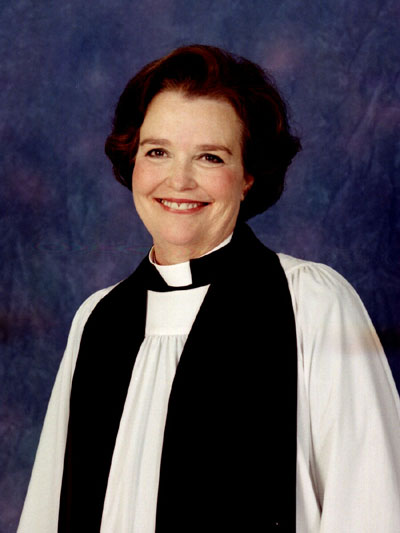
The Rev. Joan
Rudolph became
St. Mark's
Canon IX
priest on May
27, 2000,
resigning in
April 2004,
after
contracting a
cancer; she
passed away on
August 4,
2004; The Rev.
Russell
Fisher; The
Rev. W. L.
"Chip" Prehn,
Priest-In-Charge.
Interim
or supply
priests at
various times
have been the
Rev. Nicholas
Mayer, the
Rev. Lee
Adams, the
Rev. T. Robert
Ingram, the
Rev. Edward
Dentzer, the
Rev. Frank
Ambuhl, and
the Rev. James
L. Considine.
|